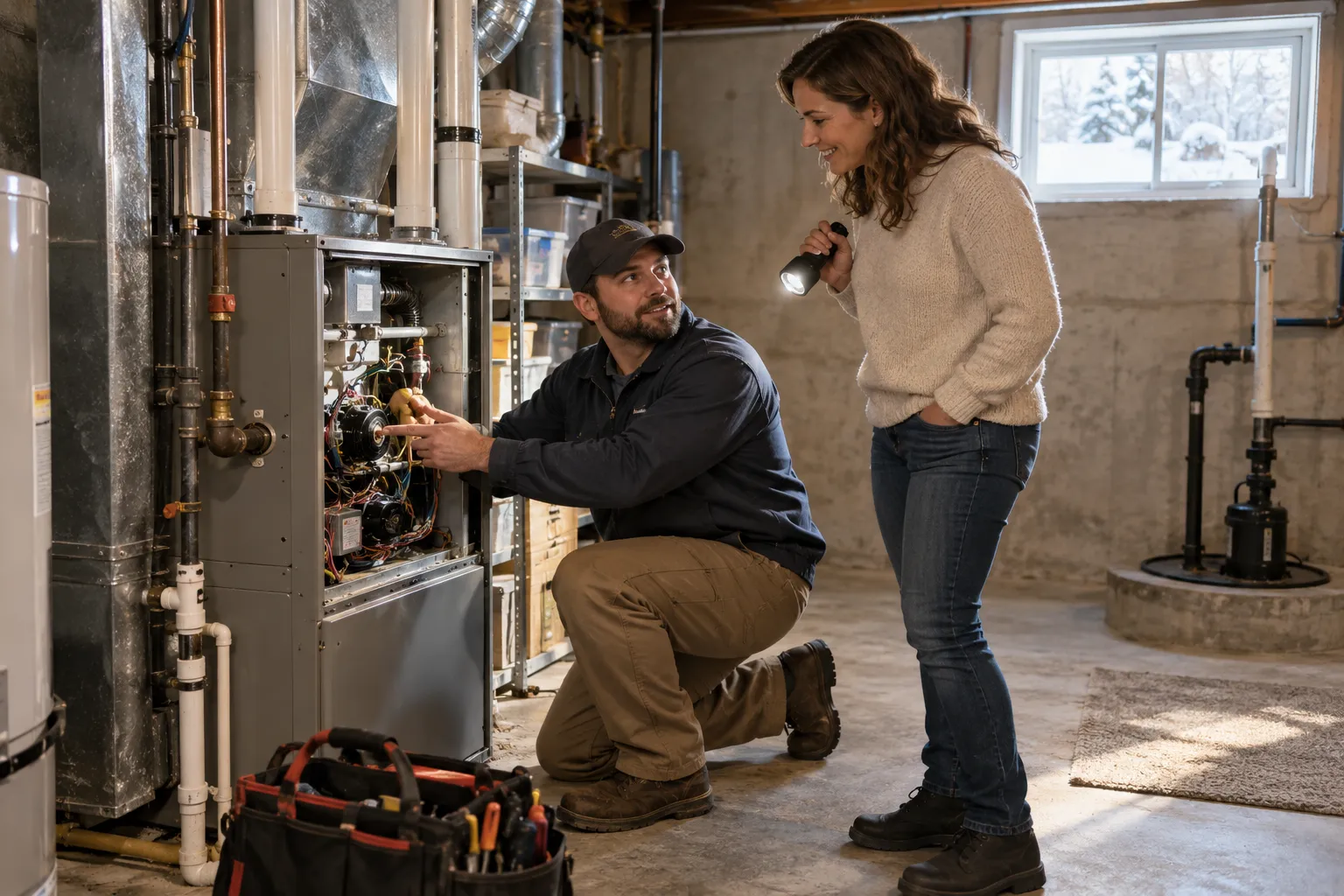
A furnace works a bit like a campfire in a metal box. It burns fuel, a blower pushes the warm air through your ducts, and a few safety parts keep everything in order. When one part fails, the whole house can go cold.
Footageeasier Heating & Air is a referral service. We do not repair furnaces. We explain the basics, show you what a homeowner can safely check, and connect you with independent HVAC providers in our network. The providers do the work. In Lorain and the Lorain area, winters are hard, so a quiet furnace is worth taking seriously. Check first, then call if the problem is still there.
Smell Gas? Leave First, Read Later
A gas leak smells like rotten eggs. If you notice it, walk outside right away. Do not flip light switches, use a lighter, or start a car in the garage.
From outside or from a neighbor's home, contact your gas utility or emergency services. Wait for them to say it is safe before you go back in.
Why Safety Rules Come Before Comfort
Think of a gas furnace like a stove that runs inside a closed cabinet. It is safe when everything is sealed and vented. If something is cracked or blocked, fumes can enter the home.
A carbon monoxide alarm is your early warning. If it sounds, get everyone outside and call for help from there.
Quick Checks Before You Call
Some problems are simple. These checks need no tools and no panel removal:
- Make sure the thermostat is set to heat and set a few degrees above room temperature.
- Replace dead thermostat batteries if it has them.
- Look at the breaker panel for a tripped furnace breaker. Reset it once only.
- Find the wall switch near the furnace and confirm it is on.
- Check that the gas valve handle is parallel to the pipe, not crosswise.
If the breaker trips again, stop. That is a sign of a deeper electrical problem.
The Filter: A Scarf Over the Nose
A clogged filter makes the furnace work like you breathing through a thick scarf. Air struggles to get through, parts overheat, and the safety switch may shut the system off.
Pull the filter out and hold it to the light. If you cannot see light through it, swap it for the same size. This is one of the few jobs that is truly yours.
Check the Vents and the Basement
Walk the house and make sure supply vents are open and not blocked by furniture or rugs. In a full basement, look for water near the furnace after heavy rain or spring flooding. Do not touch a furnace that stands in water, and do not step into a wet basement with live electrical gear.
Where the DIY Line Stops
Do not open the burner area, adjust gas parts, or relight a pilot you are unsure about. Those jobs need gauges, training, and the right tools. A wrong move can cause a fire or a gas leak. Providers do the work here.
Signs Your Furnace Needs Repair
A furnace usually gives hints before it quits. Watch for these:
- Air blows but never gets warm.
- The system turns on and off in short bursts.
- Some rooms stay cold while others feel fine.
- Your energy bills climb with no change in habits.
- There is a yellow or flickering burner flame instead of a steady blue one.
Strange Noises Tell a Story
Banging, squealing, and rattling are like a car making noise before a breakdown. A squeal often points to a belt or blower motor. A bang at startup may mean delayed ignition. Write down when the sound happens. It helps the provider.
When a Cold Snap Makes It Urgent
When deep frost sets in, a house with older frame walls loses heat fast. Pipes can be at risk if the home stays cold for long. Request a callback to check provider availability, and ask about options if you have young children, older family members, or health needs.
What Happens During a Repair Visit
The provider listens to your story first. Then they check the thermostat, test the safety controls, look at the ignition parts, and measure airflow. Think of it like a doctor who takes your temperature before ordering any tests.
You should get a clear explanation of what failed and what it costs before work begins.
Common Furnace Repairs
Most repairs involve a small group of parts:
- Igniter or flame sensor cleaning or replacement
- Blower motor or capacitor
- Thermostat wiring or replacement
- Limit switch or pressure switch
- Draft inducer motor
- Gas valve or control board in larger jobs
A dirty flame sensor is a classic example. It is like a smudged smoke detector that cannot tell the fire is lit, so the furnace shuts down for safety.
Repair or Replace Your Furnace?
An older furnace is like an old car. One repair makes sense. Repeated repairs add up. Many furnaces last around 15 to 20 years, though it varies. If yours is old, needs a costly part, or has a cracked heat exchanger, a replacement may be wiser.
Thinking About Furnace Replacement Near Me
If a provider suggests replacement, ask for a written quote with the model, size, and efficiency level. Bungalows and ranch homes often need different sizing than larger houses, so a proper load check matters. Get more than one quote if you have time.
Questions to Ask the Provider
Good questions keep you in control:
- What exactly failed, and can you show me?
- Is the quote in writing, with parts and labor listed?
- Is there a warranty on the part or the labor?
- What would you check to prevent this again?
How Heating and Cooling Care Prevents Repeat Trouble
A yearly tune-up is like an oil change. A provider cleans parts, tests safety controls, and spots wear early. Fall is a smart time, before the first hard freeze.
How Footageeasier Heating & Air Fits In
Footageeasier Heating & Air does not send its own workers. When you call or request an estimate, your details go to an independent HVAC service provider in our network. That provider sets the price, does the work, and answers for it. Some policies may cover sudden damage, so check your policy, and providers can often help document damage for a claim.
What's Included
Safety Checks
Providers test the burner, venting, and safety switches so your furnace runs without leaking fumes.
Part Repairs
Igniters, sensors, blower motors, and switches can be tested and replaced when they fail.
Airflow Review
A provider looks at filters, ducts, and vents to find why rooms stay cold.
Clear Explanation
You hear what failed, what the options are, and the written price before work starts.
Typical Furnace Repair Costs
These are typical U.S. ranges, and your price will vary by furnace type, age, part, and home. Always ask the provider for a written quote before work begins.
| Item | Typical range | Notes |
|---|---|---|
| Diagnostic visit | $75 – $200 | Often applied toward the repair |
| Flame sensor cleaning or swap | $100 – $300 | Common cause of shutdowns |
| Igniter replacement | $150 – $450 | Depends on furnace model |
| Blower motor or capacitor | $300 – $1,500 | Capacitor is the lower end |
| Draft inducer motor | $400 – $900 | Needed for safe venting |
| Control board or gas valve | $300 – $1,200 | Parts vary by brand |
How It Works
Check Safely
Look at the thermostat, breaker, filter, and vents. Leave the home if you smell gas.
Call or Request
Request a callback or use the request form to share your furnace problem.
Provider Contacts You
A provider in our network reaches out to talk through the issue.
Review the Written Quote
Look over the price and plan, then choose whether to go ahead.
Why Call Footageeasier Heating & Air
Plain Words, No Pressure
We explain each step in simple language so you can decide with a calm head.
Clear Referral
Footageeasier Heating & Air connects you; independent providers do all repair work.
Local Providers
Providers know cold winters, basements, and older homes in the area.
No Obligation
Request an estimate and decide later whether to hire.
Other Services
Need furnace repair help in Lorain?
Have a heating or cooling problem? Request a callback to check provider availability, or send a request and a local provider in our network will follow up.
No obligationFurnace Repair Help FAQ
Why is my furnace running but not blowing warm air?
Common causes are a dirty filter, a dirty flame sensor, a failed igniter, or a thermostat setting. Check the filter and thermostat first. If air stays cool, a local provider can find the cause safely.
Is it safe to relight my furnace pilot light?
Only if your manual says so and you smell no gas. If the pilot keeps going out, stop. That usually means a deeper problem that a provider should inspect.
How do I know if I need furnace replacement?
Age over 15 years, frequent repairs, rising bills, or a cracked heat exchanger are warning signs. Ask a provider for a written repair-versus-replace comparison.
Tell us what happened
Have a heating or cooling problem? Request a callback to check provider availability, or send a request and a local provider in our network will follow up.
No obligation